Cannes Lions 2024: Inclusion is income
One of the seminars at Cannes Lions opened with remarks from Sima Bahous, Under-Secretary-General of the United Nations and Executive Director of UN Women. She reminded marketers of their ability to influence attitudes and thereby counter the discrimination that fuels inequality, poverty, polarisation, violence and conflict.
“The antidote is inclusion – building societies where all people are treated with respect, can live dignified lives and develop their potential. Inclusive, progressive advertising can influence how we see one another. That is the most fundamental change of all. And you marketers have the opportunity to show an alternative reality, where we are not afraid of differences but embrace the benefits of diversity and inclusion. It is an opportunity you must not waste,” she urged.
Seven years ago, UN Women brought together 24 organisations from the advertising industry to form The Unstereotype Alliance in order to actively influence the situation. Today, the alliance includes 240 organisations and 12 national chapters across five continents.
Sara Denby, Head of the Unstereotype Alliance Secretariat at UN Women, pointed out that 75 per cent of people believe brands should take social responsibility.
Kantar’s databases show that brand performance is positively affected by progressive content in advertising.
Advertising that portrays people in a positive and progressive way can be expected to generate higher ROI.
People from underrepresented groups are more likely to choose brands that actively engage in these issues.
The way brands behave in advertising has a major impact on how markets perceive them.
“But when we talk about liking, purchase intent and ROI forecasts, we are still mainly talking about what many people dismiss as soft values. Advertising is ultimately expected to sell. We are accountable to boards and shareholders for that. So if inclusive advertising does not affect the bottom line, or if purchase intent does not also generate sales, then leadership teams will not support it. That is why it is necessary to provide evidence,” Sara Denby concluded.
She explained that The Unstereotype Alliance has therefore produced a new report titled The Business Case for Progressive Advertising, presenting evidence of exactly this relationship. The report is scheduled to be presented to the UN General Assembly in September.
The reason this discussion has become particularly important right now is the growing media rhetoric claiming that “woke = broke”.
Sara Denby argued that the term “woke” has become an aggressively dismissive label for anti-racism, anti-sexism and the basic idea that all people should be treated with dignity and respect.
“We prefer the word progressive. But a loud minority continues to insist that progressive values undermine business performance. That diversity is harmful. That inclusion leads to blandness,” she said.
“There have been some high-profile mistakes. But they are mainly examples of how not to create progressive content, rather than arguments for avoiding it altogether.”
She also noted that the phrase “woke = broke” has received far more attention and space than it deserves, and that this has influenced the overall development.
During 2023, support for DEI initiatives in the US fell by 90 per cent.
So now the aim of the new report is to present hard evidence showing what reality actually looks like.
CLEAR DATA PROVIDES THE ANSWER
Marketing professor Andrew Stevens from Saïd Business School at the University of Oxford then presented extensive evidence showing how things actually stand.
The studies covered four years of data from 392 brands across 58 countries. The research combined data on progressive advertising from Kantar and the Geena Davis Institute and Metrics Lab with brand statistics from Kantar BrandZ. In addition, sales data was gathered from several of the participating brands, Kantar Worldpanel and Nielsen IQ.
“The question we are answering is important. But it is actually quite simple,” Andrew Stevens explained.
“Brands that score highly according to the metrics developed over many years by The Unstereotype Alliance – do they also achieve stronger brand value, higher sales and greater profitability?”
The results were grouped into five levels, comparing the top tier with the others.
Andrew Stevens concluded that the answers were remarkably clear.
“In terms of short-term sales, the best-performing brands increased 3.46 per cent more than the others. But over a slightly longer period – one to two years – the difference becomes even clearer. There, growth is 16.26 per cent higher.”
What, then, happened to brand value?
Kantar BrandZ has long argued that the key driver of brand value is being perceived as meaningfully different.
And the brands that scored highest for progressive advertising also stood out as both more meaningful and more distinctive. They scored roughly 10 per cent higher than the other brands.
Loyalty also increased by 29 per cent, while pricing power improved by 52 per cent.
“Consumers are willing to pay more for these brands. They are simply worth more,” Andrew Stevens concluded, noting that more progressive brands:
- Sell more
- Grow more
- Find it easier to retain customers
- Perform better commercially
- Also contribute more positively to society
CADBURY GAVE EXCLUSION THE FINGER
One company that recognised this was Mondelez. Jon Halvorson, Senior Vice President of Consumer Experience and Digital Commerce at Mondelez International, explained that before 2018 the company had made only occasional investments in inclusive communication.
“But we asked ourselves what would happen if we shifted all our advertising towards a more inclusive approach. And if we were going to do it, we had to do it properly. That also meant ensuring that the consultants, agencies and partners we worked with reflected the diversity of society,” he explained.
As an illustration of both this approach and the importance of long-term commitment, he highlighted Cadbury Fingers.
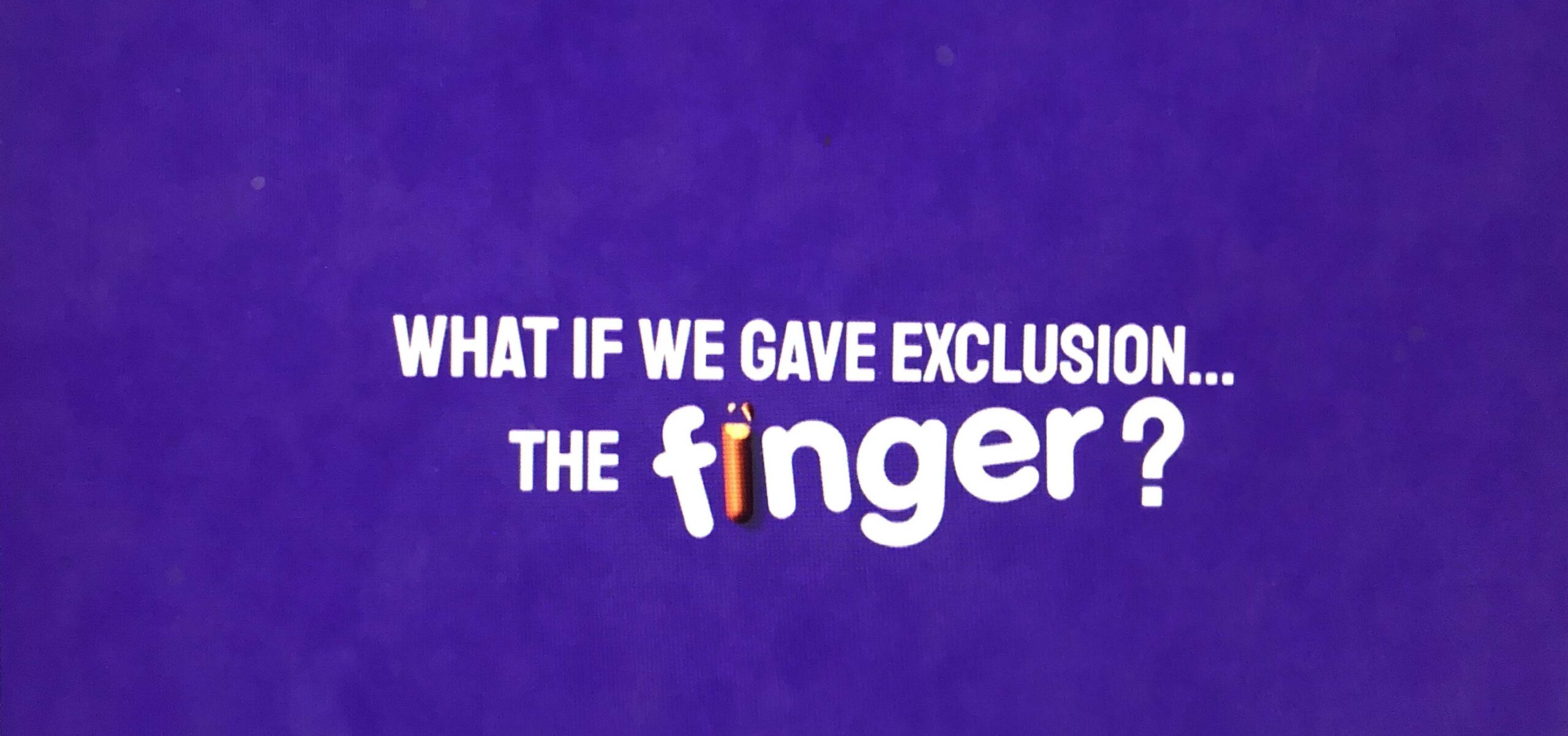
A biscuit called Fingers naturally lends itself to sign language, so the company partnered with the British organisation for deaf children with the ambition of encouraging more people to learn basic sign language.
The campaign attracted considerable attention and also won several advertising awards.
“But it still was not a success during the first year. However, the marketing team believed in it and fought for it,” Jon Halvorson explained.
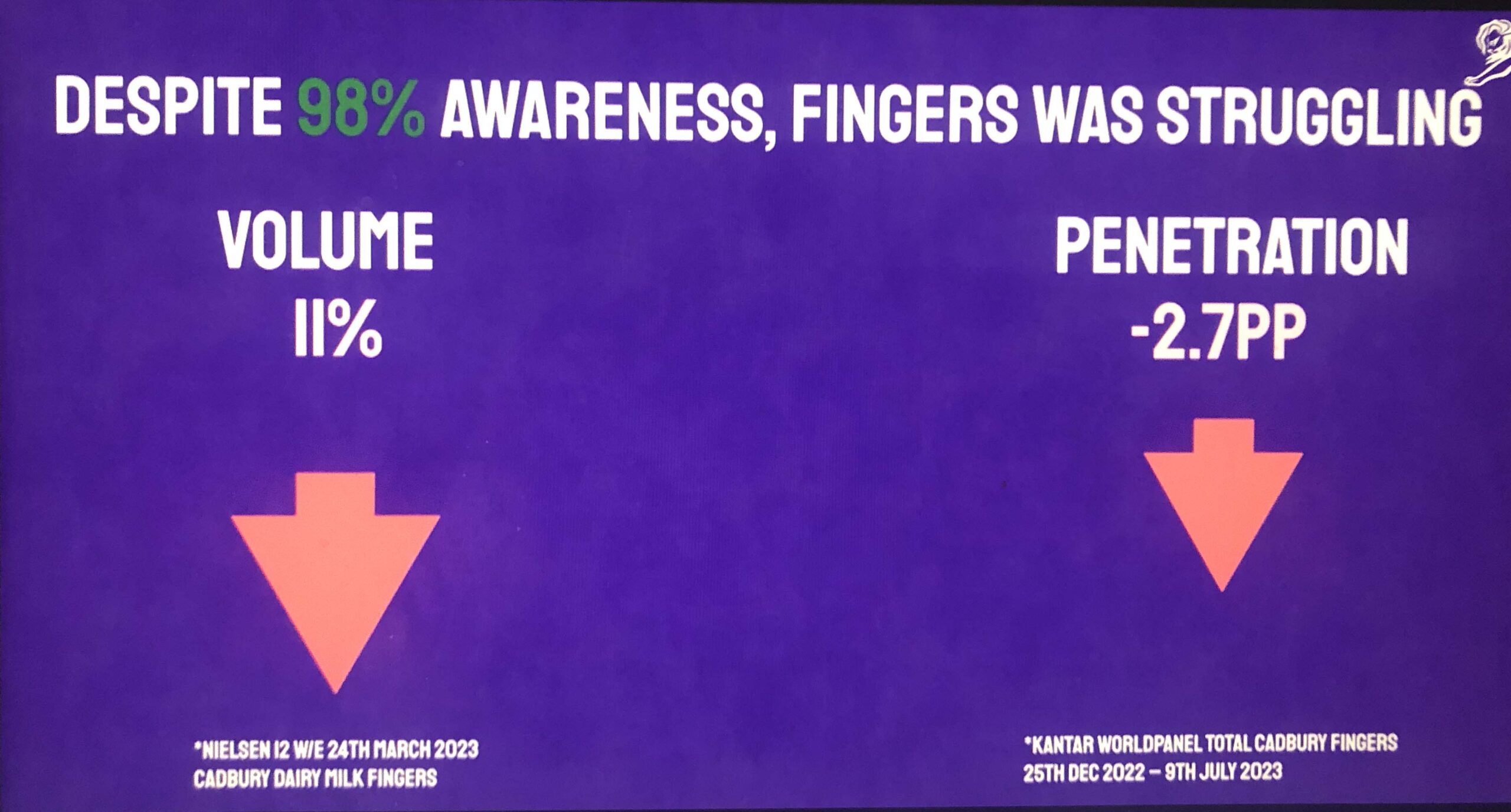
So they kept what worked best and continued finding new ways to make Fingers part of public conversation.
One of Britain’s favourite conversation topics is, of course, football, so the company also partnered with Chelsea FC. In front of 40,000 spectators at Stamford Bridge, a sign-language choir consisting entirely of deaf participants performed the Chelsea anthem Blue is the Colour.
The club’s top players also promoted a new website where people could learn football terms in sign language.
And this time, things really started to move.
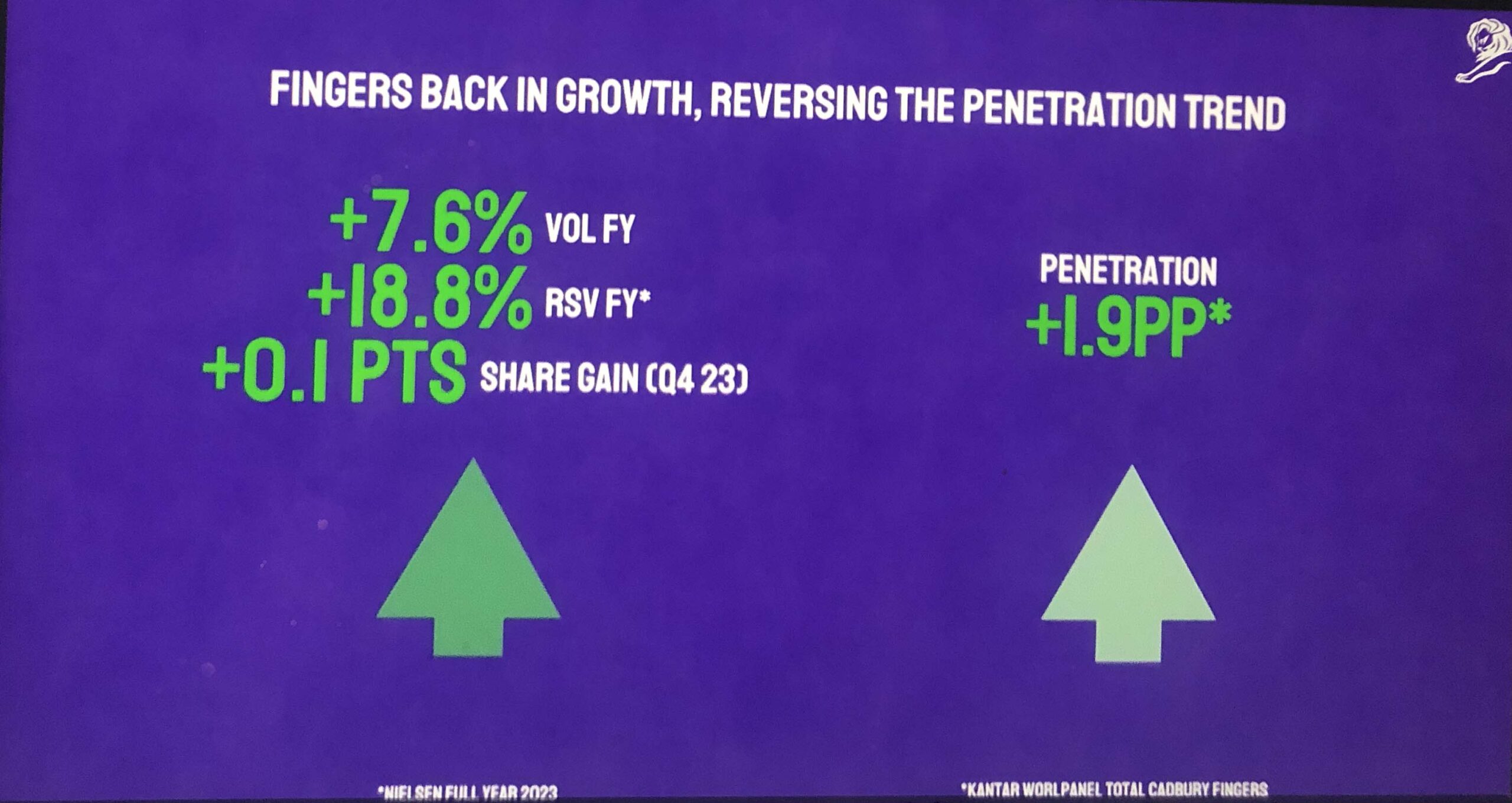
Volume growth increased by 7.6 per cent, while retail sales value rose by 18.8 per cent, among other results.
MANY SIMILAR EXPERIENCES
Cadbury was far from alone in seeing the value of inclusive advertising.
Several other marketers described similar experiences with progressive communication.
One of them was Esi Eggleston Bracey, Chief Growth and Marketing Officer at Unilever. She explained that when their advertising became less stereotypical and more progressive, provocative and representative, it also strengthened the brand and improved business performance.
“This kind of advertising contributes 103 per cent more strongly to brand power. Perceived distinctiveness is 108 per cent higher, and brand persuasion scores improve by 86 per cent.”
She repeated what she had previously said about Dove: thanks to the Real Beauty platform, the brand is now three times larger than when the concept was first introduced.
Mitch Oliver, Global Vice President for Brands and Purpose at Mars, also described how the company’s work to increase diversity in advertising had not only been successful among consumers.
“It has also inspired everyone working at Mars. And it has made it easier for us to attract talent to the company.”
So in reality, it is not “Woke = Broke”.
It is:
Inclusion = Income
